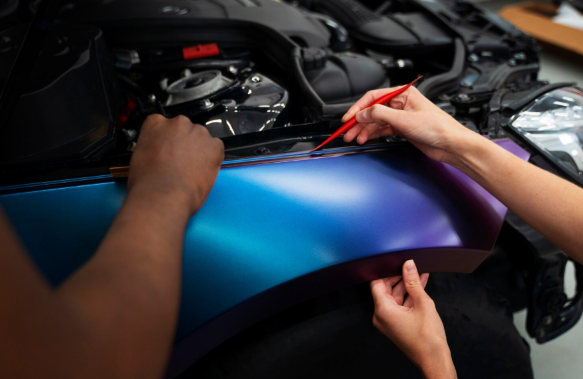
Factory customization usually holds its value. Aftermarket work usually does not. The gap is widest in exactly what Los Angeles drivers like most, meaning wheels, suspension, exhaust, and tuning. A modified car is not a bad buy, but it gets priced and financed on what the factory built. We operate Car Lux Inc as a luxury vehicle dealership across two Inglewood lots, and modified cars arrive as trade-ins constantly. Every vehicle clears a pre-check inspection covering mechanical condition, safety systems, and vehicle history before listing.
What Counts as Factory and What Counts as Aftermarket
Factory customization means options chosen when the car was built. They were ordered through the manufacturer and recorded on the build sheet. That covers trim packages, upgraded audio, performance packages, special paint, and accessories fitted at the port. All of it appears in the VIN build record, which is why anyone can verify it years later.
Aftermarket customization is anything added after the car left the factory, whether by a shop in Gardena or by the owner in a driveway. Quality varies enormously across that range. A reputable shop installing a known coilover kit, with an alignment afterward, is a different proposition from a driveway install with the alignment untouched. Neither one shows on a build sheet. What matters to a dealership, a lender, and an insurer is not how good the work is. It cannot be verified through the manufacturer, so it counts as unknown.
What Modifications Do to Resale and Trade-In Value
Most aftermarket work returns very little of its cost in Los Angeles, CA. Forged wheels, a full exhaust, and a tune can represent a serious spend. They add close to nothing to what a dealership will pay. A realistic cost breakdown of luxury car customization usually confirms this before the first invoice even arrives, since paint, interior, and performance mods rarely return their price at trade-in. The pool of buyers who want that exact combination is small. The pool who would rather have the original parts is large, and value follows the next buyer.
Reversible modifications are the exception worth knowing. Wheels, exhaust, and suspension that swap back cost you nothing on trade-in, provided you kept the originals. Keeping the stock components is the single most useful habit for anyone modifying a car here. Store them and hand them over when you sell. Permanent work sits at the other end. A car with cut bodywork or a non-original engine is worth what a specialist buyer will pay, not what the model generally fetches.
Bring the car to either Inglewood lot, and we will appraise it with you standing there. Trade-in or outright sale, both work, and neither requires a purchase.
What Modifications Do to Financing and Insurance
Lenders value a car as collateral using standard guides built on factory configuration. Aftermarket parts are not added to that valuation. A heavily modified car finances as the standard version of itself, regardless of what was spent on it. That rarely blocks an approval. It does affect how much can be financed against the car.
Insurance follows similar logic with a sharper edge. A standard policy covers the vehicle as manufactured, and aftermarket parts are often excluded or capped low unless declared and scheduled. A buyer who does not declare modifications finds out at claim time, which is the worst possible moment. Declare the work and get it in writing. Electric cars add a wrinkle of their own. Software and drivetrain changes carry separate complications, and our piece on buying a used electric vehicle covers what to check.
What to Inspect on a Modified Car Before Buying
Modified cars reward careful inspection more than standard ones. The work can be excellent or improvised, and the difference is invisible from ten feet away. Tire wear tells you most of what you need to know about a lowered car. Uneven wear on the inner edges points to an alignment nobody corrected after the suspension came down.
Check these five things on any modified car:
• Tire wear across the full tread, especially the inner edges on a lowered car
• Whether original parts come with the sale, and what condition they are in
• Any check engine or ABS warnings, including ones cleared recently
• Whether a tune is present and whether the car returns to stock software
• Installation quality underneath, looking for cut wiring, zip ties, and fresh sealant
Take the car to your own mechanic if anything on that list stays unclear. We have no objection to a pre-purchase inspection on any vehicle we sell. On a modified car, it is the sensible move rather than an insult.
Want a Second Opinion on a Modified Car?
Looking at a modified car and want a second opinion before you commit? Call 310-412-9072, and we'll walk you through what our inspection actually covers on that specific vehicle.
Call 310-412-9072Customizing a Car You Already Own
Plenty of buyers want a standard car and a short list of changes afterward. That is the cleanest path for anyone who cares about resale. Starting from a factory car with documented history gives you a known baseline. Every change after that is yours to document. Keep receipts, keep original parts, and stay with shops that will stand behind the work.
Order matters more than people expect. Wheels and tires first, then suspension, then an alignment after anything that touches suspension geometry. Software comes last, if it happens at all. Anyone planning modifications on a car bought here can start at the Customize Your Vehicle page. The principle holds whether the car is a truck getting a lift or a sedan getting wheels. Decide what the car is for before deciding what goes on it.
Selling or Trading a Modified Car in Los Angeles
Two options exist, and they are genuinely different transactions. A trade-in applies an agreed value toward the car you are buying. It lowers the amount financed and keeps everything in one visit. An outright sale through Sell Us Your Car requires no purchase at all. That suits anyone selling one car while taking time to buy another.
Either way, the appraisal starts from the factory vehicle. It then adjusts for condition, history, and market demand. The modifications get assessed on whether they help or complicate resale. Presenting the car well changes the outcome more than arguing about parts cost. Bring the original components and documentation of the work. Be straightforward about what was done and by whom. Timing plays in too, and our look at seasonal luxury car pricing explains when trade volume rises.
Our two lots in Los Angeles, CA handle buying, selling and trade-ins seven days a week. Drive the car over, and we will walk it with you, stock parts in the trunk or not.
Ready to Get Your Car Appraised?
Bring the car to either Inglewood lot and we'll appraise it with you standing there, stock parts in the trunk or not. Call 310-412-9072 to get started.
Call 310-412-9072Related Topics: