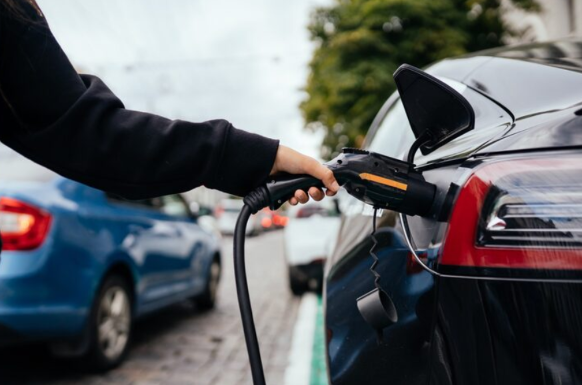
The best lot for a used electric car lets you check the battery before you sign, and finance it like anything else in stock. Those two things remove most of the risk, and plenty of dealerships can do neither. We operate Car Lux Inc as a premium luxury car dealership with two Inglewood lots and over 300 vehicles. Every one clears a pre-check inspection covering mechanical condition, safety systems, and vehicle history. Electric cars share rows with the gas inventory, so a Polestar and a Porsche are one visit apart.
What Separates an EV-Ready Lot From One That Just Lists Them
Plenty of dealerships carry electric cars without being equipped to talk about them. The tell comes when you ask about state of health rather than range. A lot that quotes the original EPA figure is reading a spec from the year the car was built. That number says almost nothing about the battery in front of you.
An EV-ready dealership does something simpler. It charges the car, shows you the vehicle's own range estimate, and lets you drive it long enough for that estimate to mean something. Part of that readiness comes down to where luxury car dealerships source exotic inventory in the first place, since a lot buying from a single off-lease pipeline sees far fewer EVs than one pulling from auctions and trade-ins too. Our lots keep cars available for inspection and test drives during opening hours. That matters more for electric cars than for anything else we sell. An EV's condition hides in photographs in a way that a worn seat does not. Buyers coming from online-only platforms tend to notice the difference immediately.
Battery Health Is the Spec That Changes the Math
Every lithium battery loses capacity over time. The rate depends on charging habits, driving style, and heat. A car that lived on daily fast charging in the Inland Empire ages differently. One that trickle-charged in a Culver City garage does not. Mileage can be identical, and the batteries still will not match. That difference drives what a used electric car is worth to you.
Most of it you can read yourself in about fifteen minutes. Charge the car fully, note the full range estimate it reports, and compare that against the original figure for the model year. Watch how the estimate behaves on a real drive rather than at a standstill. On a Tesla, the trip meters give consumption in watt-hours per mile, which tells you more than the range display. Bring those numbers into the price conversation. A measurable capacity difference is a fair thing to discuss.
Before you commit to a used electric car, check these five things:
• State of health or full charge range, read off the car rather than the listing
• Which charge port standard the car uses and what that means for your usual chargers
• Whether any battery or drive unit work appears in the service history
• The current software version and whether the car still receives updates
• Tire condition, since electric cars are heavy and wear tires faster than gas equivalents
Come plug one in at either lot and watch the numbers yourself. We will hand you the keys and leave you to it. Check View Inventory first to see which EVs are currently charged and ready to test.
Want to Check an EV Before You Drive Out?
Want to know a specific EV's real state of health before you drive out to see it? Call 310-412-9072, and we'll check that it's still on the lot and charged up for you.
Call 310-412-9072Which Electric and Hybrid Models Reach Our Lots
Stock moves quickly and changes weekly, so availability genuinely varies. What we can describe is the shape of it. Recent listings across both Inglewood lots have included the Polestar 2 Long Range Dual Motor and the Ford Mustang Mach-E. The Kia EV9 and the Nissan LEAF have appeared, alongside hybrids including the Honda Clarity and the Toyota Prius. Tesla shows up regularly across several trims. Comparing electric vs hybrid luxury cars side by side, on the same lot, is part of what makes that decision easier than reading spec sheets alone.
That spread is deliberate. An independent dealership buys from auctions, trade-ins, and outright purchases rather than one off-lease pipeline. A 60,000electricSUVandasub-20,000 commuter EV shares a row, and the benefit is comparison. Put a long-range luxury EV against a used LEAF and work out whether your commute justifies the premium. Which options matter is a separate question, and our rundown of luxury car features worth having applies to electric cars too. Call first, since a car listed Tuesday can sell by Thursday.
Financing a Used Electric Vehicle in Los Angeles
Lenders underwrite an electric car the same way they underwrite a gas one. Buyers often expect an EV to complicate the application, and it usually does not. The vehicle serves as collateral, so lenders care about market value, condition, and remaining useful life. A pre-checked EV with documented history satisfies that as readily as a sedan.
Our lender network spans traditional banks, Capital One pre-qualification, subprime lenders for scores below 620, and second-chance lenders. A single decline does not end the file, because the application moves to the next tier. There are no guaranteed approvals. Terms depend on income, down payment, and the vehicle chosen, with subprime APRs in California usually between 12 and 24 percent. Starting a credit application online tells you which price tier is realistic before you fall for a specific car.
Charging Realities for a Los Angeles Commute
Range anxiety across Los Angeles, CA, is mostly a parking question wearing a costume. A driver with a garage outlet and a 30-mile round trip will never think about charging. A driver in a Koreatown apartment with street parking will think about it constantly. Work out where the car sleeps before you work out which car to buy.
Public charging here is dense by national standards and uneven across the city. The practical gap between charge port standards has narrowed as adapters and network access opened up. Charging speed on the specific car still matters. An older model that accepts a lower peak rate holds you at a charger far longer than a newer one at the same station. Ask about maximum charging rate, not just range. Think in minutes added per week rather than theoretical miles.
Seeing the Car Before You Commit
The case for buying an EV from a physical lot comes down to sequence. Online retailers deliver first and let you inspect afterward. The first time you see the battery work under load is after the paperwork is signed. Our sequence runs the other way. You walk the lot, read the car's own numbers, drive it, and decide after that.
Both lots sit a short drive apart, one on South La Brea Avenue and one on Hawthorne Boulevard in Lennox. You can compare two separate inventories without crossing Los Angeles, CA, to do it. Buyers who cannot make the trip can run the whole purchase remotely through AutoDriven, browsing and application included. Either path reaches the same inventory and the same lenders. The questions worth asking stay the same, and our guide to judging whether a dealership is trustworthy covers them.
Bring a phone charger and half an hour to our Inglewood lots. Read the battery numbers, drive the car through real traffic, and let it make the case.
Ready to Check the Battery Numbers?
Bring a phone charger and half an hour to our Inglewood lots, and let the battery numbers make the case. Call 310-412-9072 first, since a car listed Tuesday can sell by Thursday.
Call 310-412-9072Related Topics: